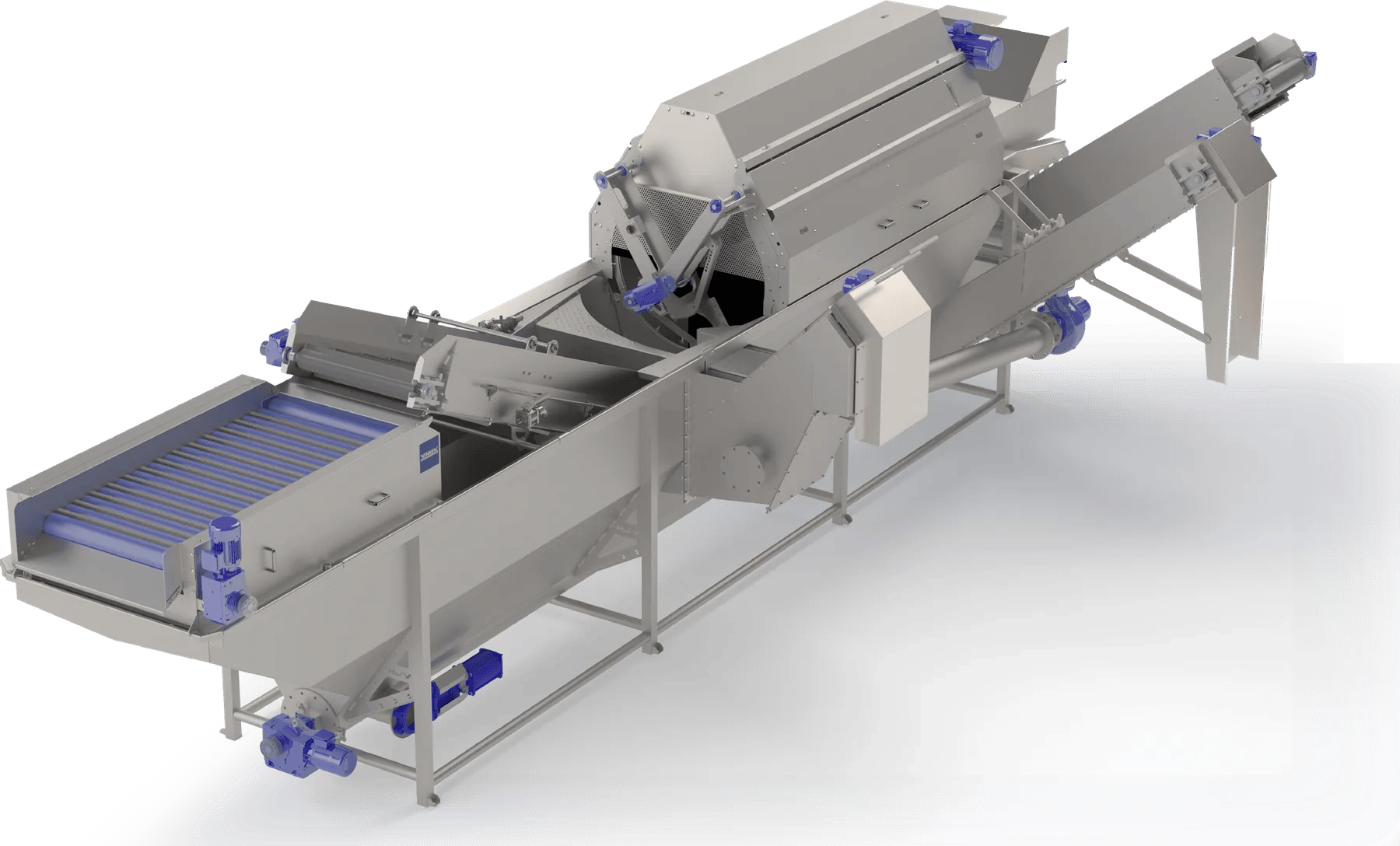
Washer & Drying Table Combination
A barrel washer and a 20-roller drying table on one machine, so every wet transition drains into one tank and is managed in one place. Built with 3 or 4 metre barrels at 1200 or 1500 mm diameter.
Part of the HJV Group of Companies · Parts and service through HJV ServiceHub
705-435-3226

Cleans and reuses wash water on stationary and mobile lines, so less goes to discharge ponds. It uses HJV Typhoon, a biodegradable flocculant that settles fine clay particles.
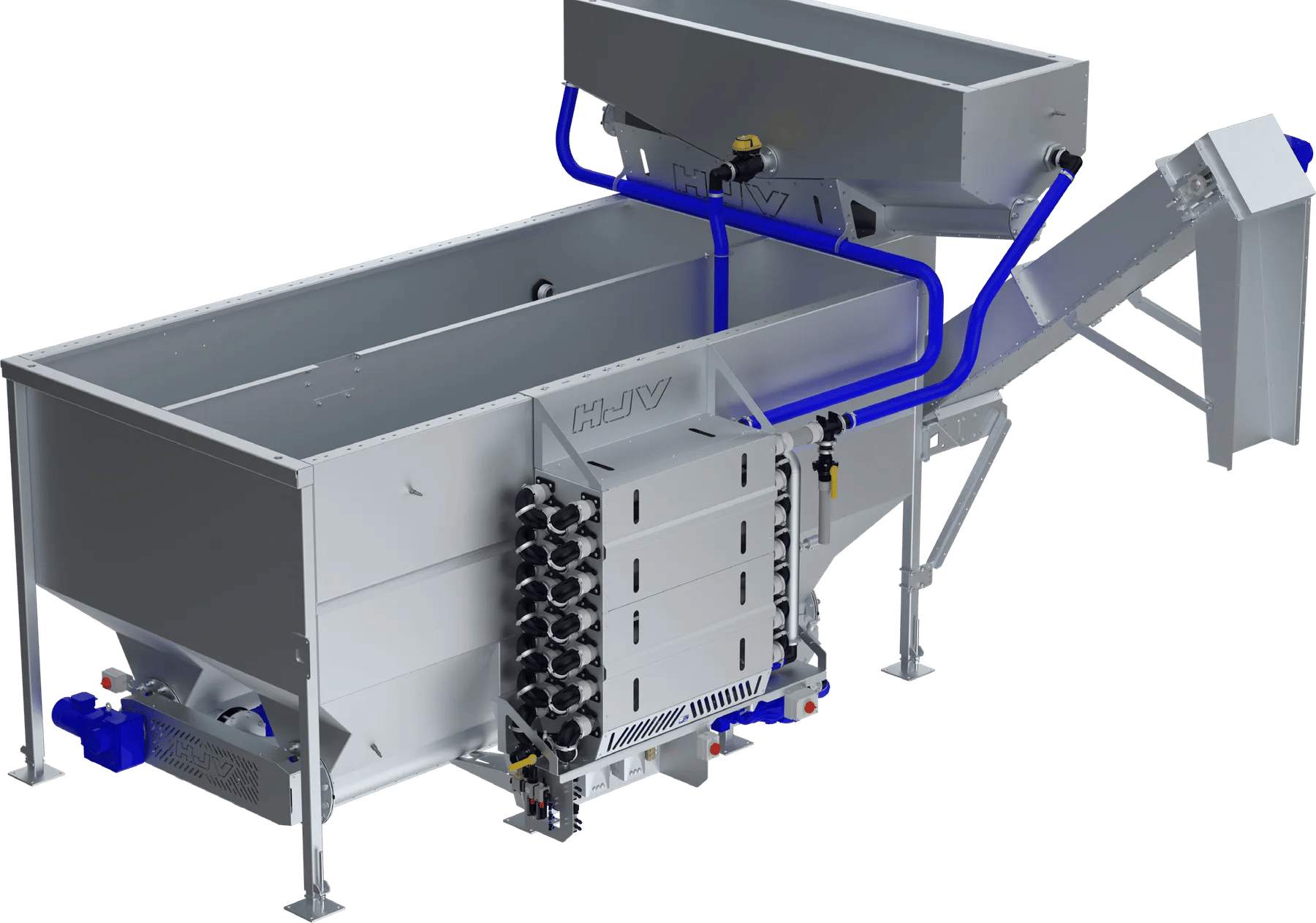
The HJV Water Recirculation System (WRS) treats wash water and sends it back to the line instead of out to a large discharge pond. That cuts fresh water use and keeps nutrients from leaching into the water table.
It works with HJV Typhoon, a biodegradable flocculant. Typhoon is positively charged and binds to the negatively charged fine particles and clay that make wash water turbid, forming heavier particles that settle out. A Typhoon mixing system injects the right amount into the dirty water.
The settling tank is built to length for your water volume, which lets heavy particulates settle naturally and reduces how much flocculant you need. The WRS can mount on an HJV washer, run standalone, or ride on a wash trailer.
Why it works
Natural, biodegradable and non-toxic.
Injects the correct dose into turbid water.
No special storage requirements.
Helps bind nitrogen and phosphorus.
Configure it
Video
 Play video: Mobile potato washer in action: water recirculation
Washing & stone removal
A barrel washer and a 20-roller drying table on one machine, so every wet transition drains into one tank and is managed in one place. Built with 3 or 4 metre barrels at 1200 or 1500 mm diameter.
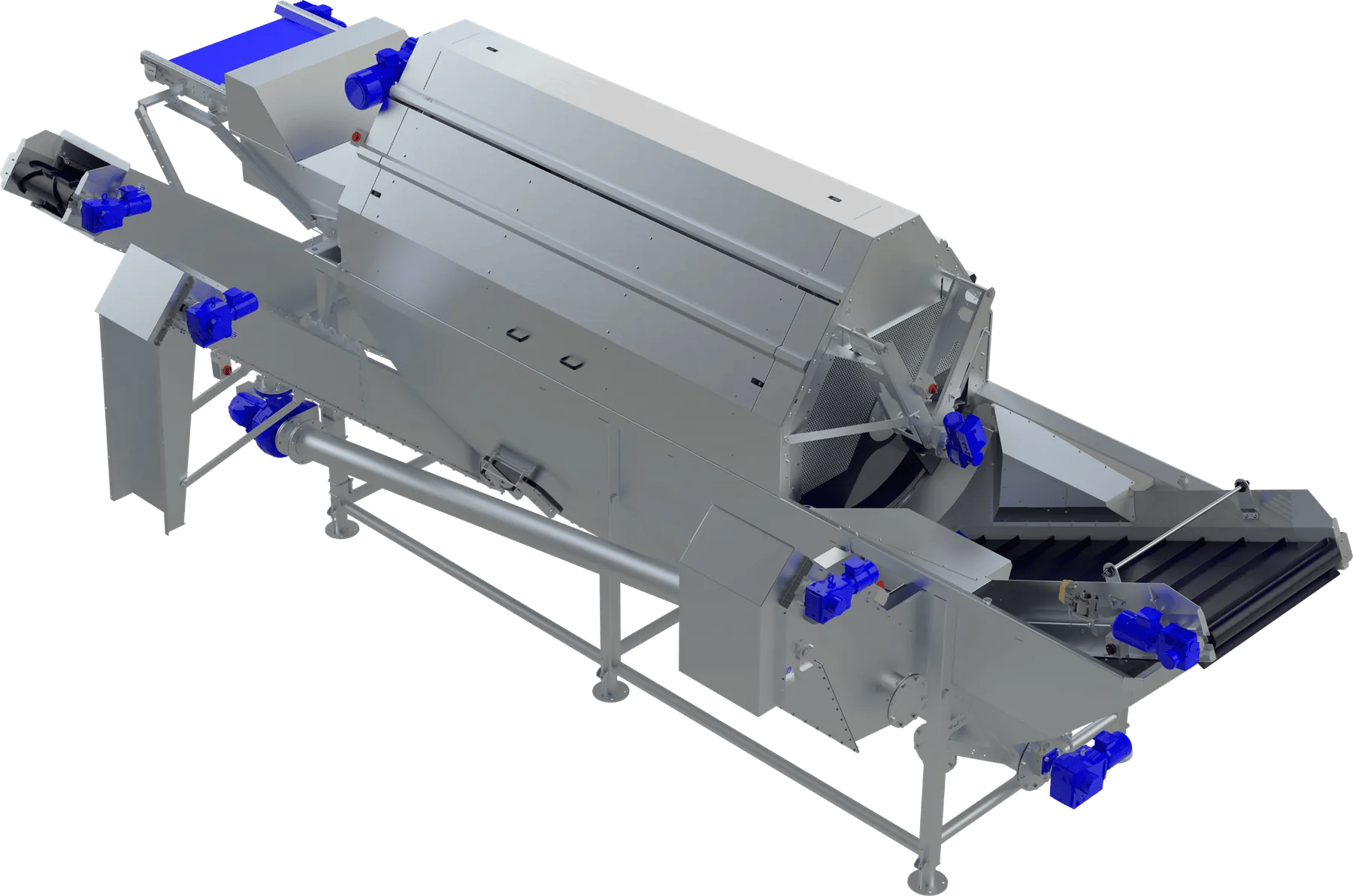
A stainless steel barrel washer in lengths from 3 to 9 metres and 1200 or 1500 mm diameters, sized to your volume and to how dirty the crop comes in.
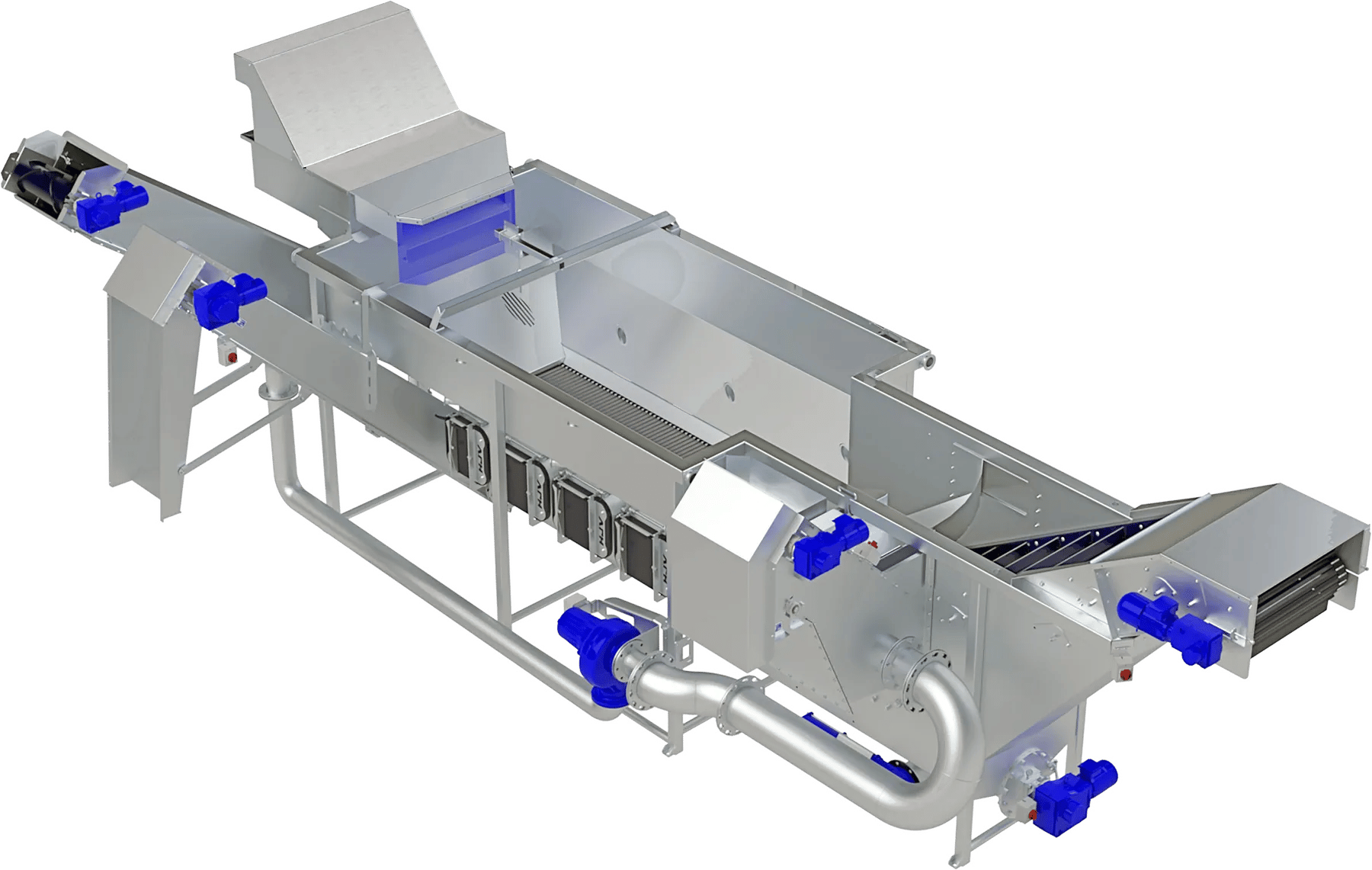
Up to 125 tons (250,000 lb) per hour
Soaks product ahead of the washer so dirt loosens, stones drop and floating debris comes off early, at up to 125 tons per hour. It also holds product so the wash line gets an even feed.
Tell us what you run, how much of it, and where it goes next. We'll lay out the line with you.