Brush Table
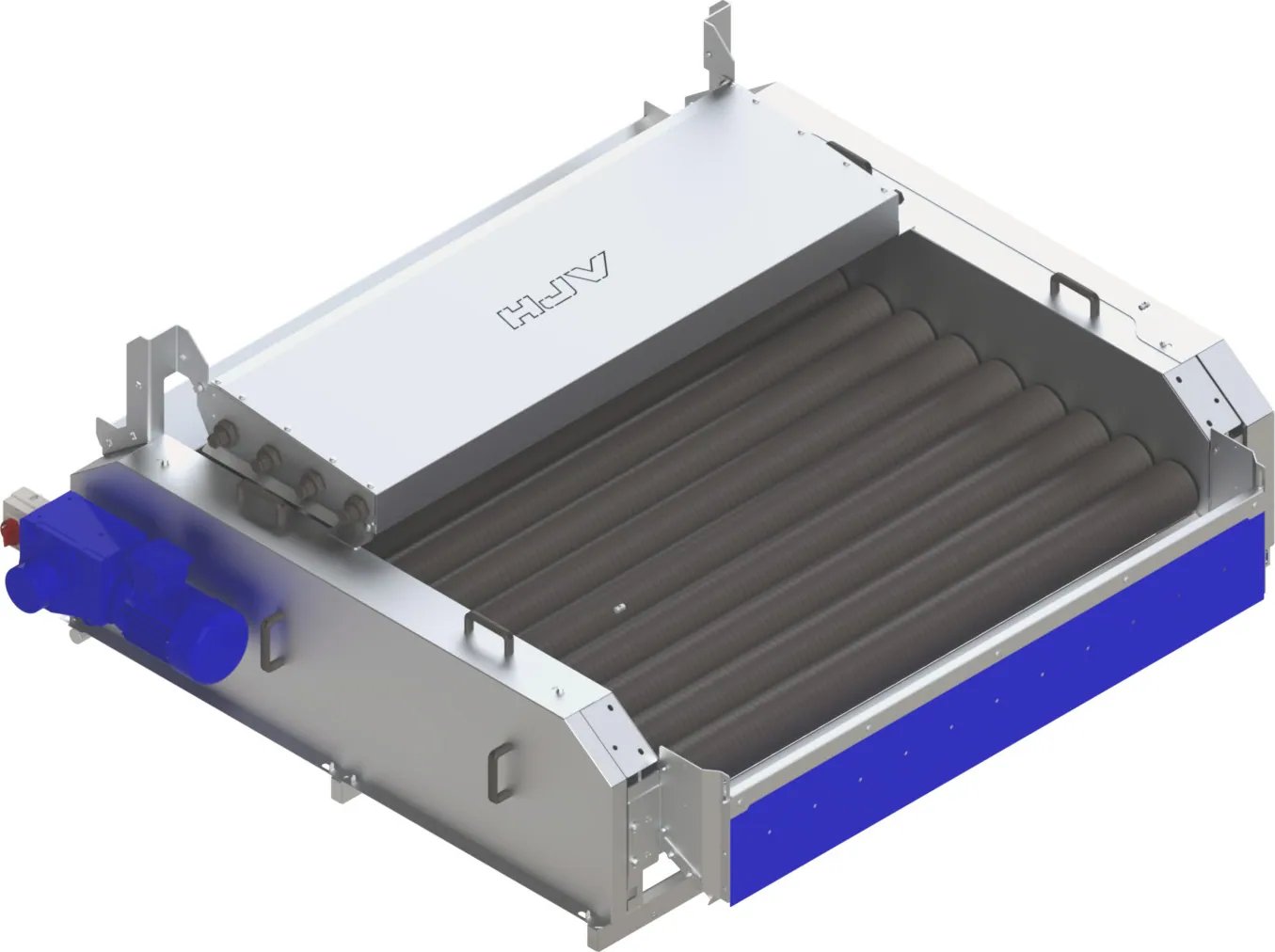
A rotating brush bed that cleans potatoes, seed potatoes and onions gently, with rollers that lift out from the top for cleaning.
Part of the HJV Group of Companies · Parts and service through HJV ServiceHub
705-435-3226

Crop
Complete onion lines: dry cleaning, grading on hexagonal screens, inspection, optical sorting, weighing, bagging and palletizing.
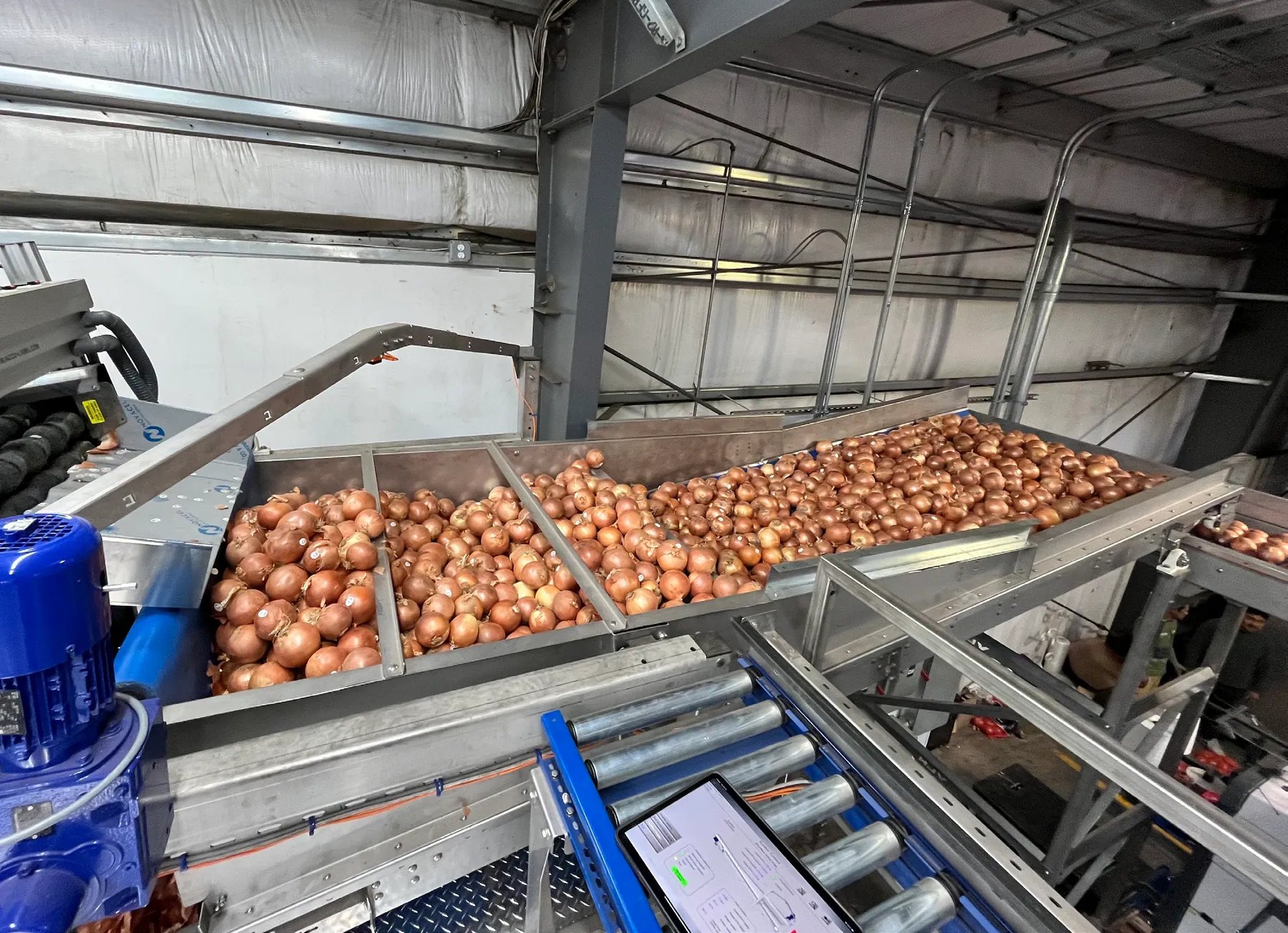
We build complete onion lines, from a simple cleaning line to a fully automated packing line, using the same equipment that runs our potato lines.
The Dirt-Sep, Xtractor and CX Coil Expander take out dirt and debris, and the brush table cleans gently without damaging skins.
The grader module takes hexagonal steel screens for onions and bulbs. Roller inspection tables give your crew a final check on a blue background, and TOMRA optical sorters handle quality sorting: the TOMRA 3A on unwashed crop and the TOMRA 5A, which TOMRA rates for onions among other vegetables.
Storage bins and the multi-bin system keep packing fed. Agrimech weighers, bagging and closing, the Master Baler and palletizing finish the line.
From receiving to pack-out
A rotating brush bed that cleans potatoes, seed potatoes and onions gently, with rollers that lift out from the top for cleaning.
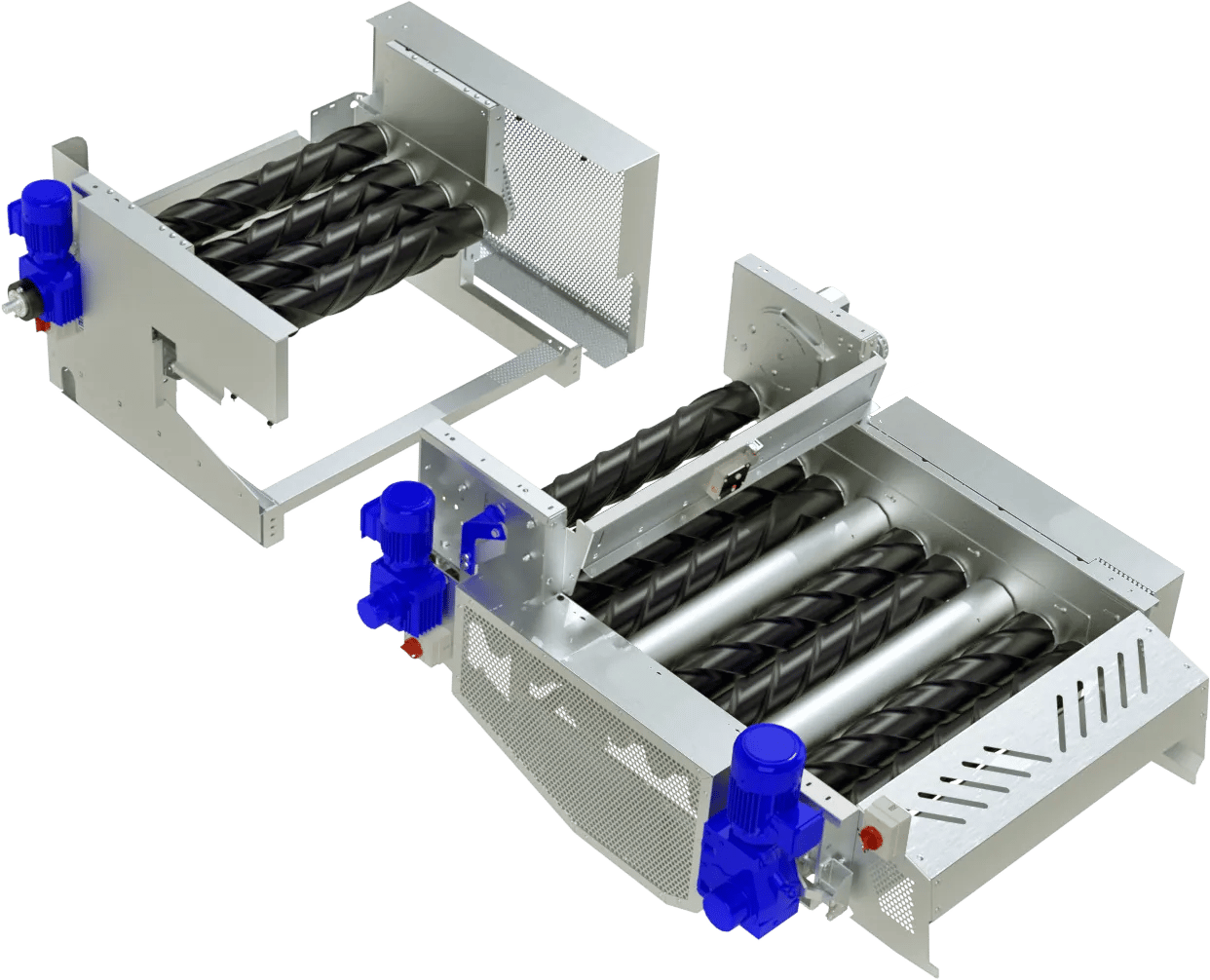
A set-and-run separator for intake lines: top removal plus two dirt separation modules, built to move between crops without readjusting.
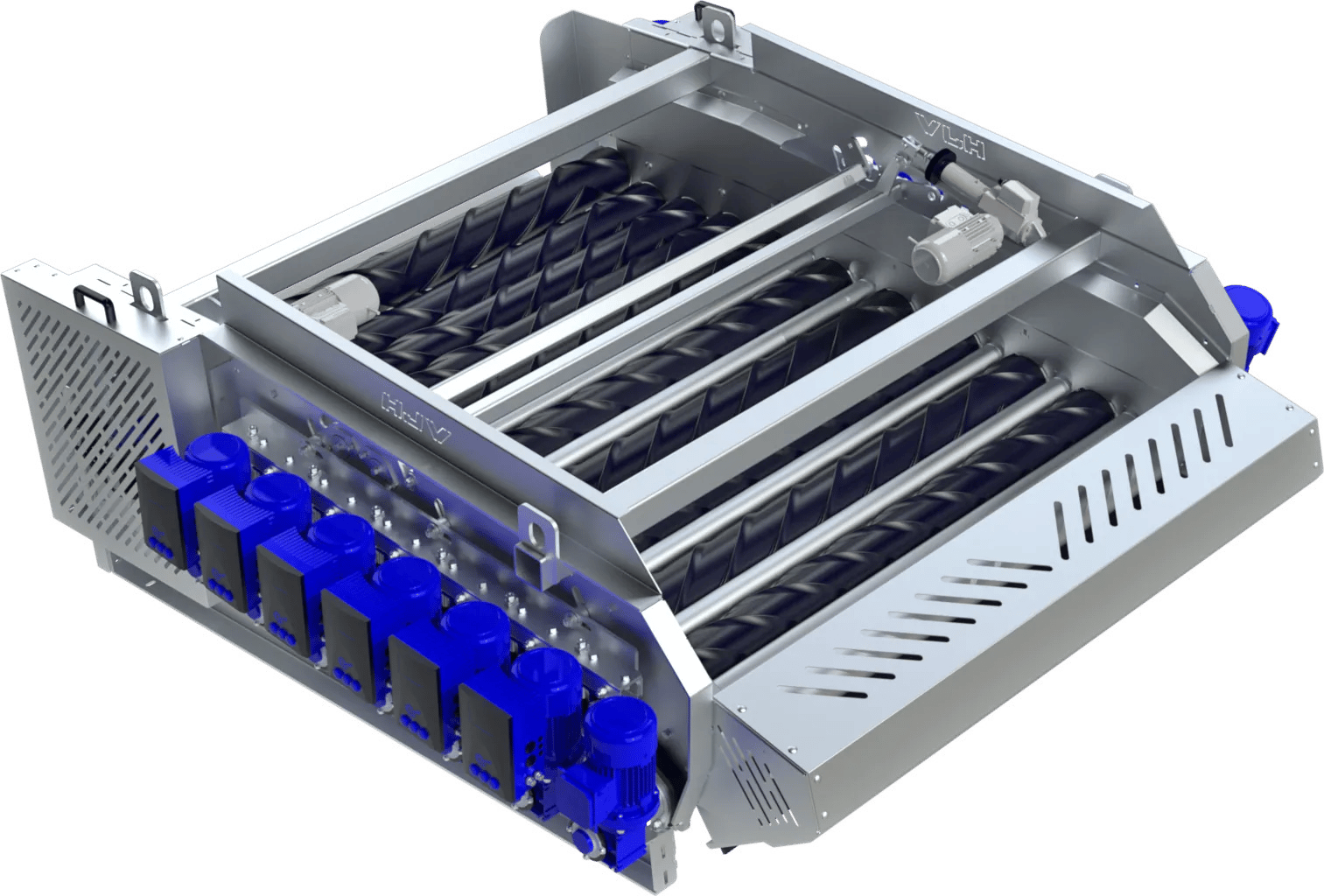
A cleaning table with on-demand roller gap and height control and its own electric drive on every shaft, so you can change settings on the go or call up a saved recipe.
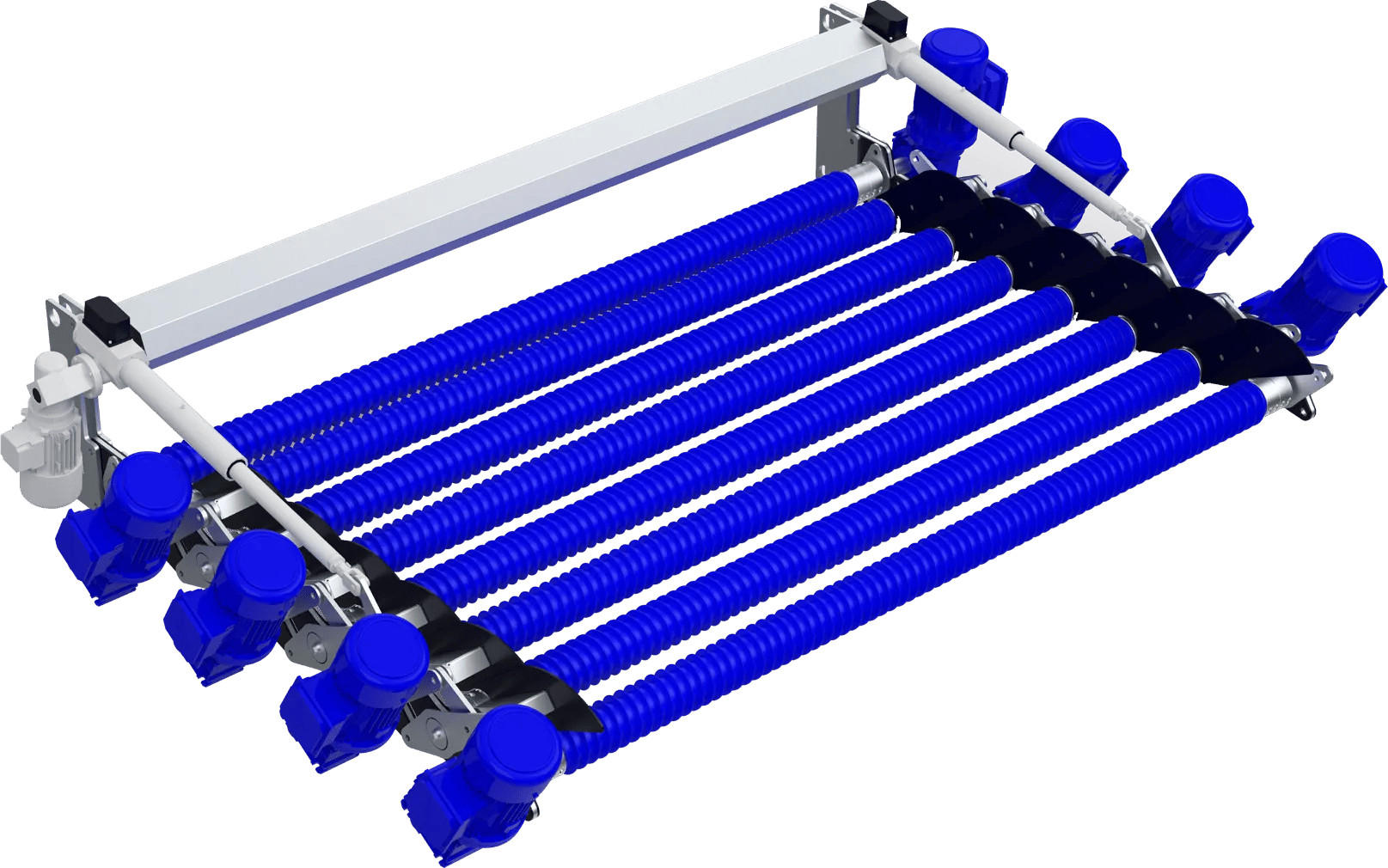
Expanding coil rollers with a gap adjustable from 12.5 mm (1/2") to 89 mm (3.5"), for taking dirt out in wet conditions or pulling a size profile out of the flow. Widths from 900 to 2400 mm.
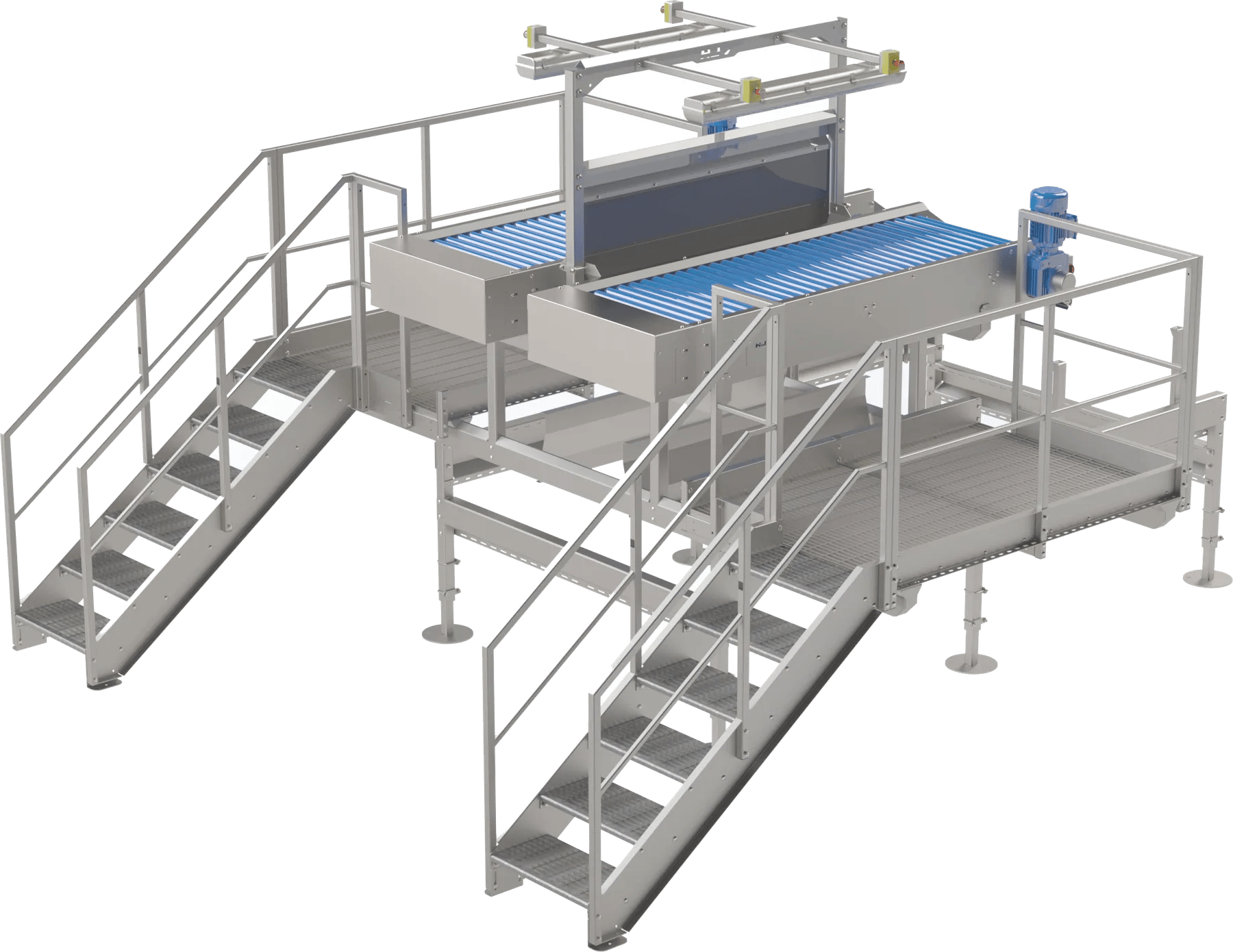
Blue-background inspection tables with LED lighting and E-stops, in widths from 450 to 1500 mm, for the manual final check.
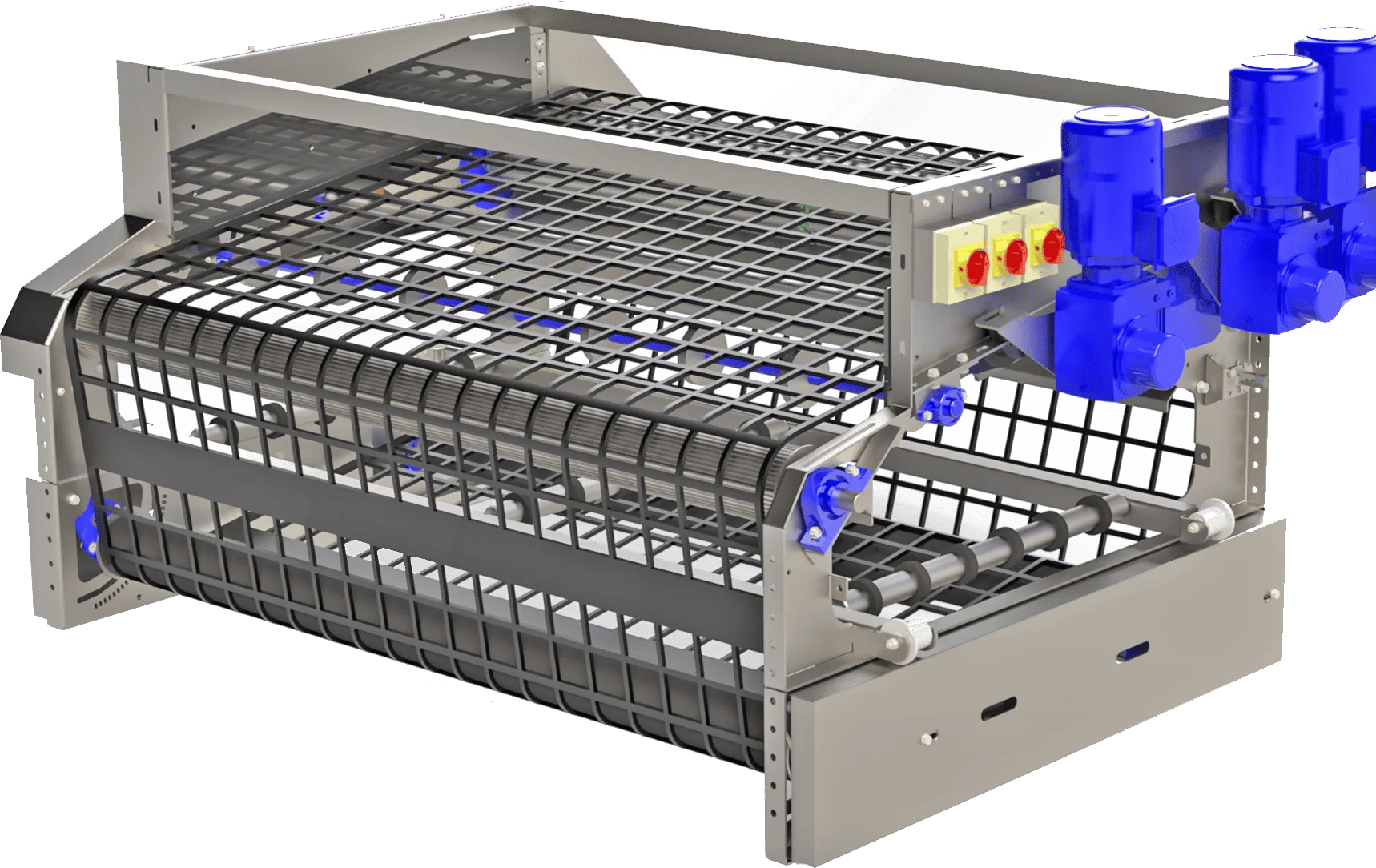
A screen grader for potatoes, onions, beets and bulbs, with triple short-throw agitators and a push-and-pull drive, in widths from 900 to 2400 mm and three lengths.
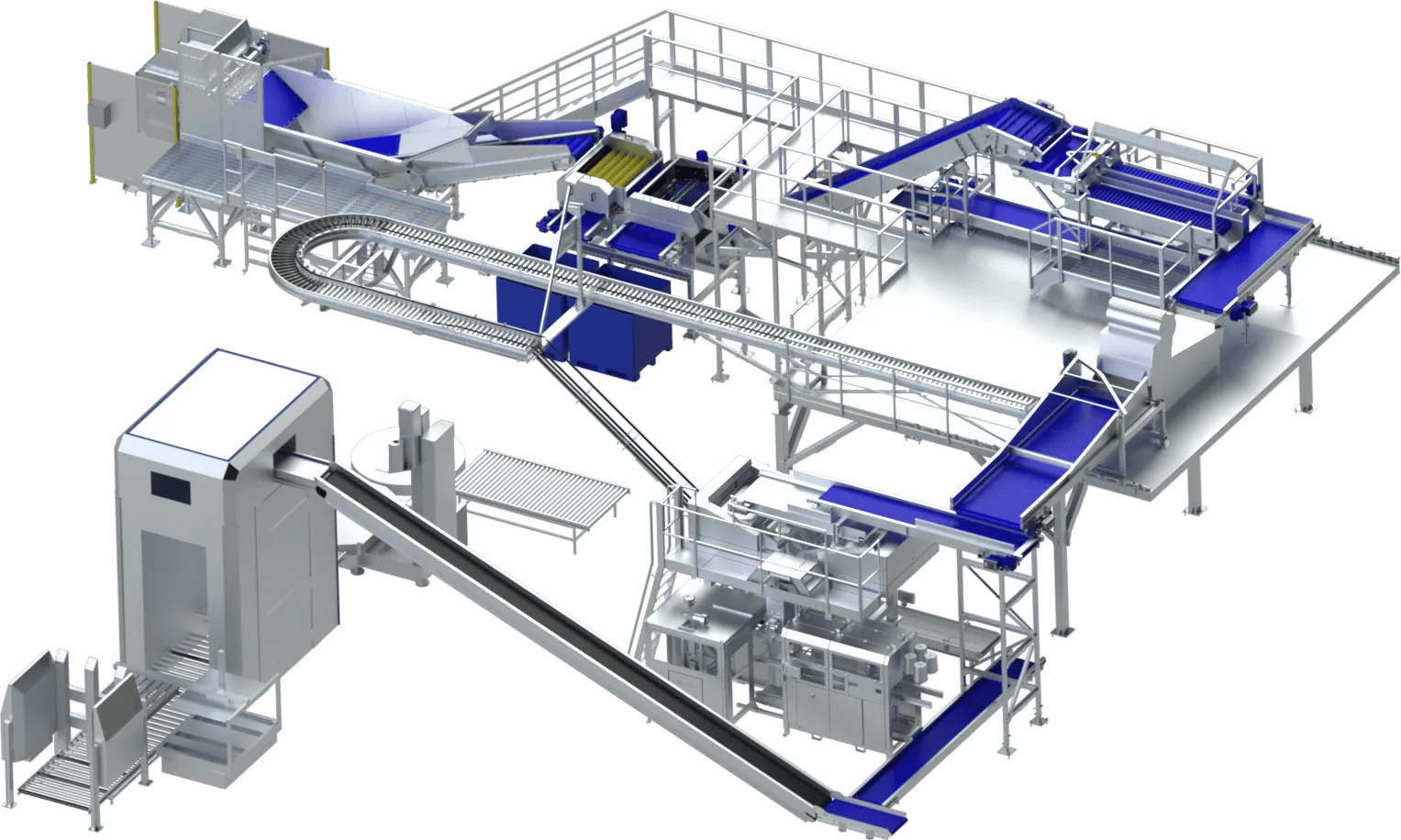
Complete onion lines built from HJV handling, cleaning and grading equipment, with partner machines for optical sorting, weighing, carton feeding, bag placing and palletizing.
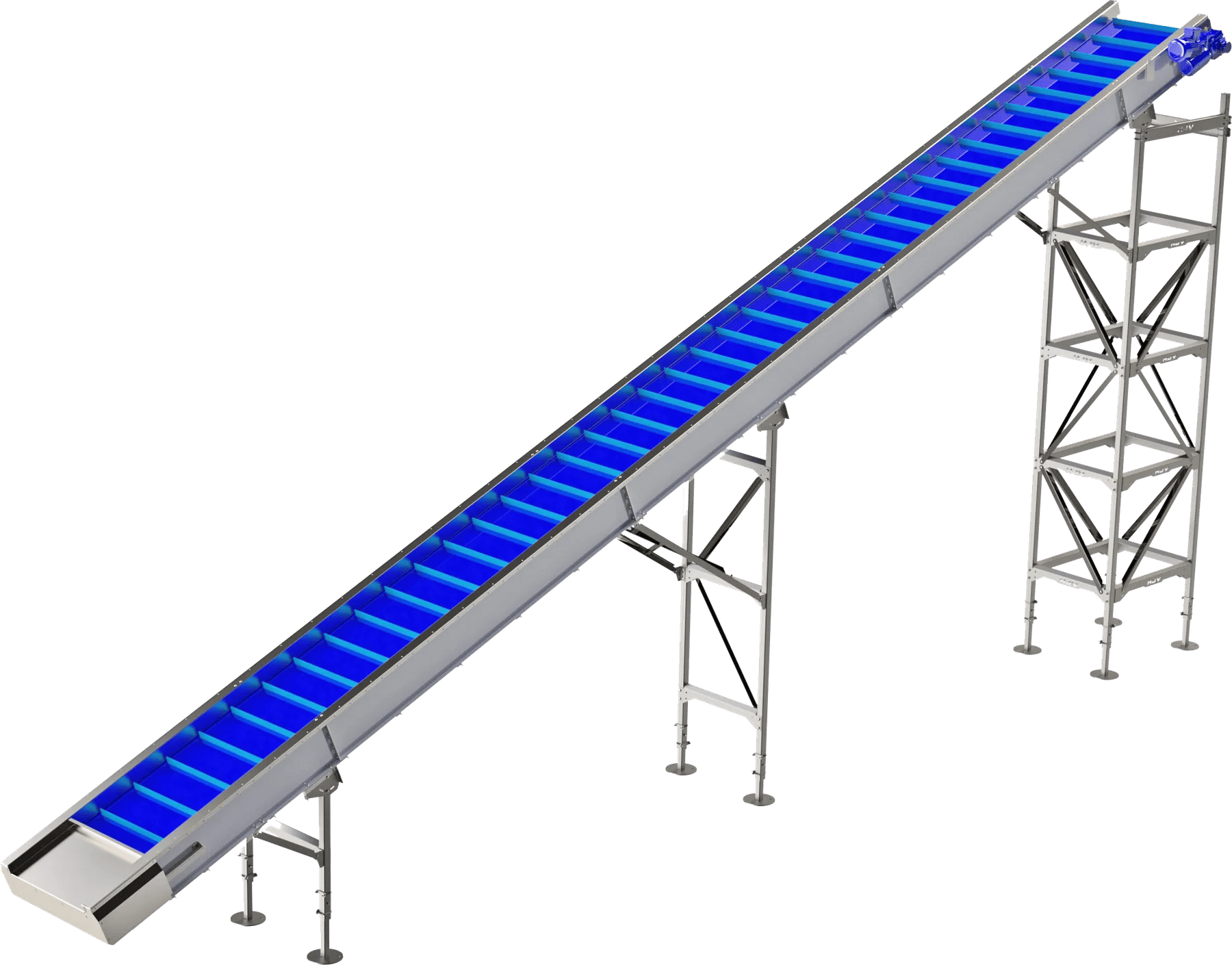
Stainless conveyors and elevators with endless food-grade PVC belts, soft drop zones at transitions, and same-diameter shafts that need no machining to replace.
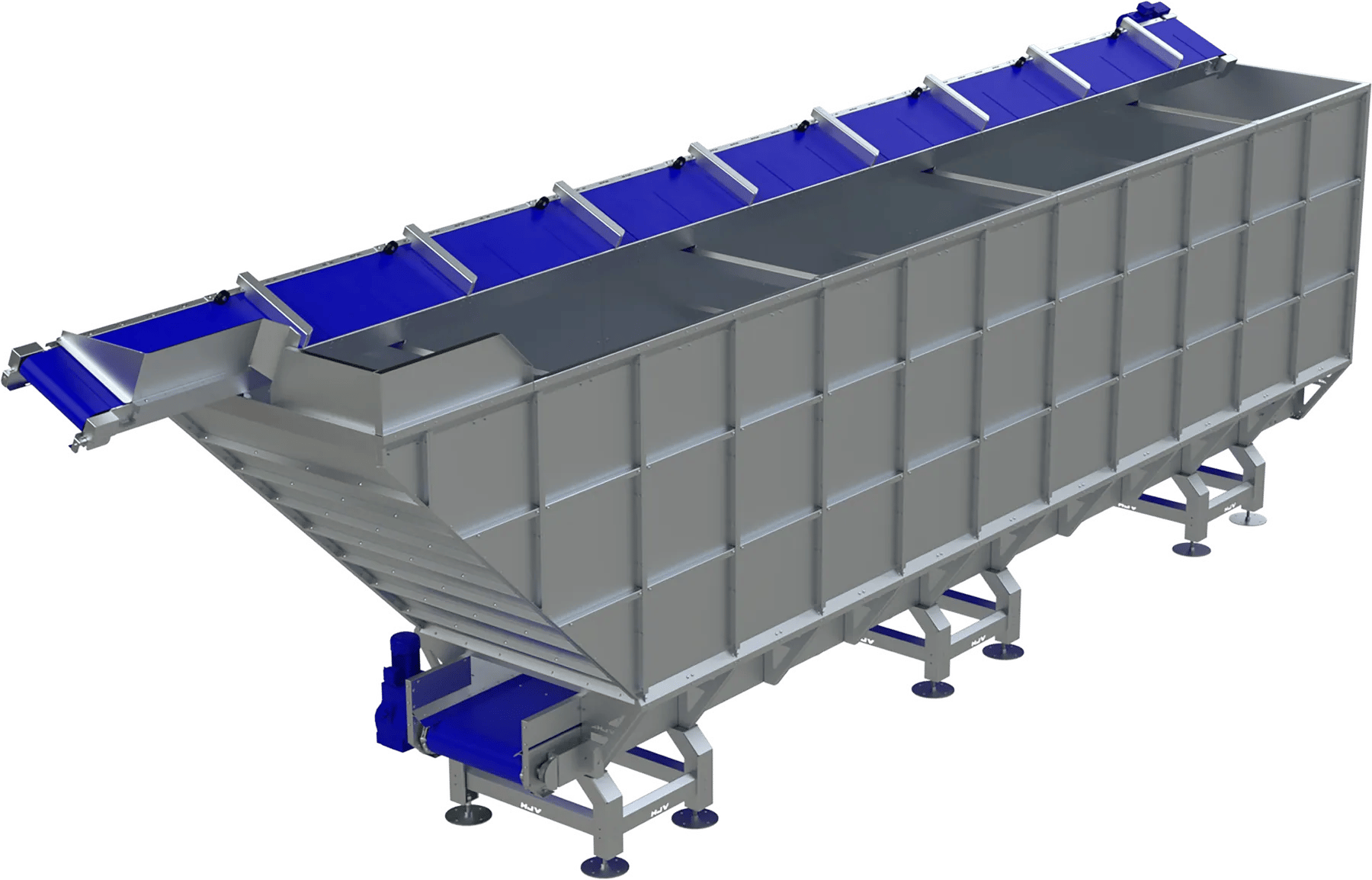
High-capacity bins that keep trucks moving, and multi-compartment bins for pre-sized product so packing equipment runs at a steady speed.
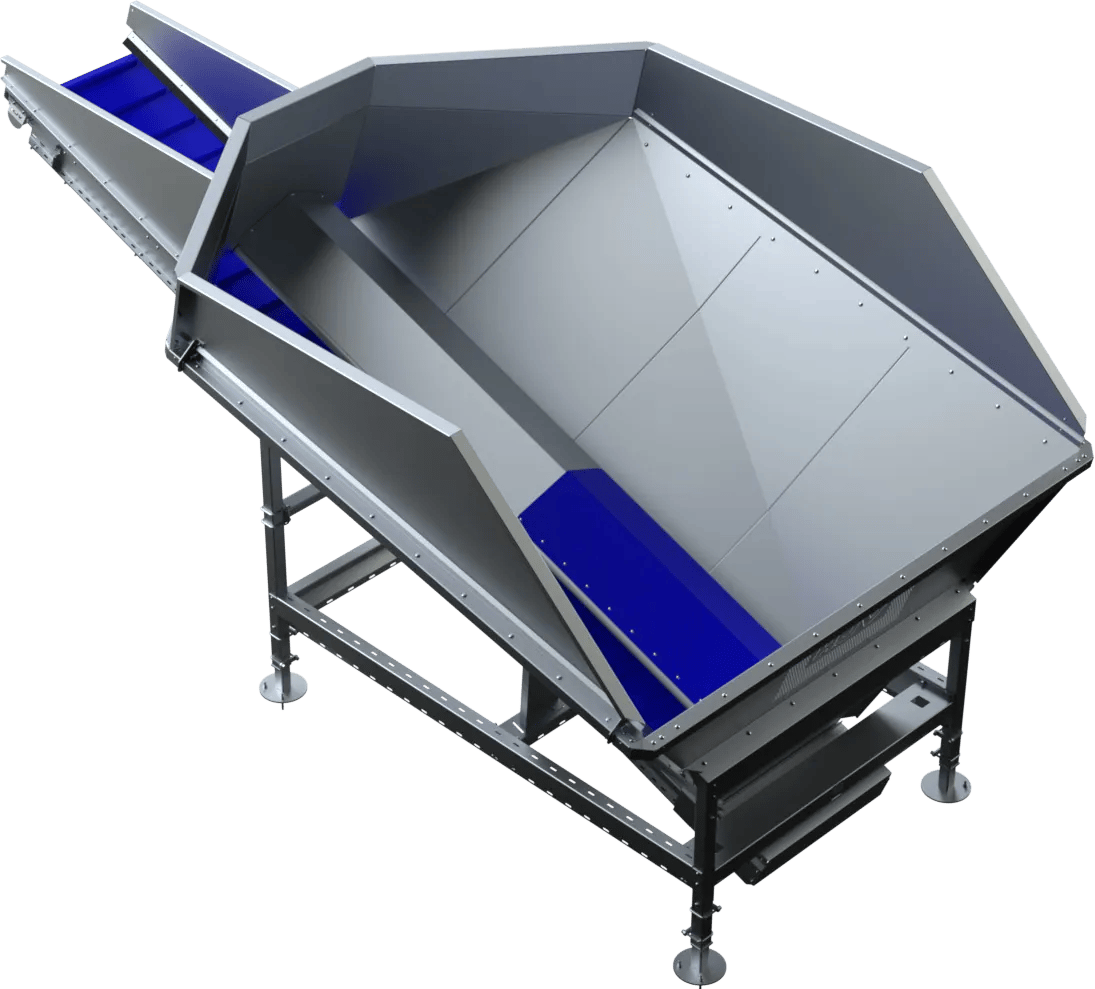
A loading hopper that meters product onto the line at a steady rate. Fill it with a loader over the end or sides, or with a dipping-end elevator.
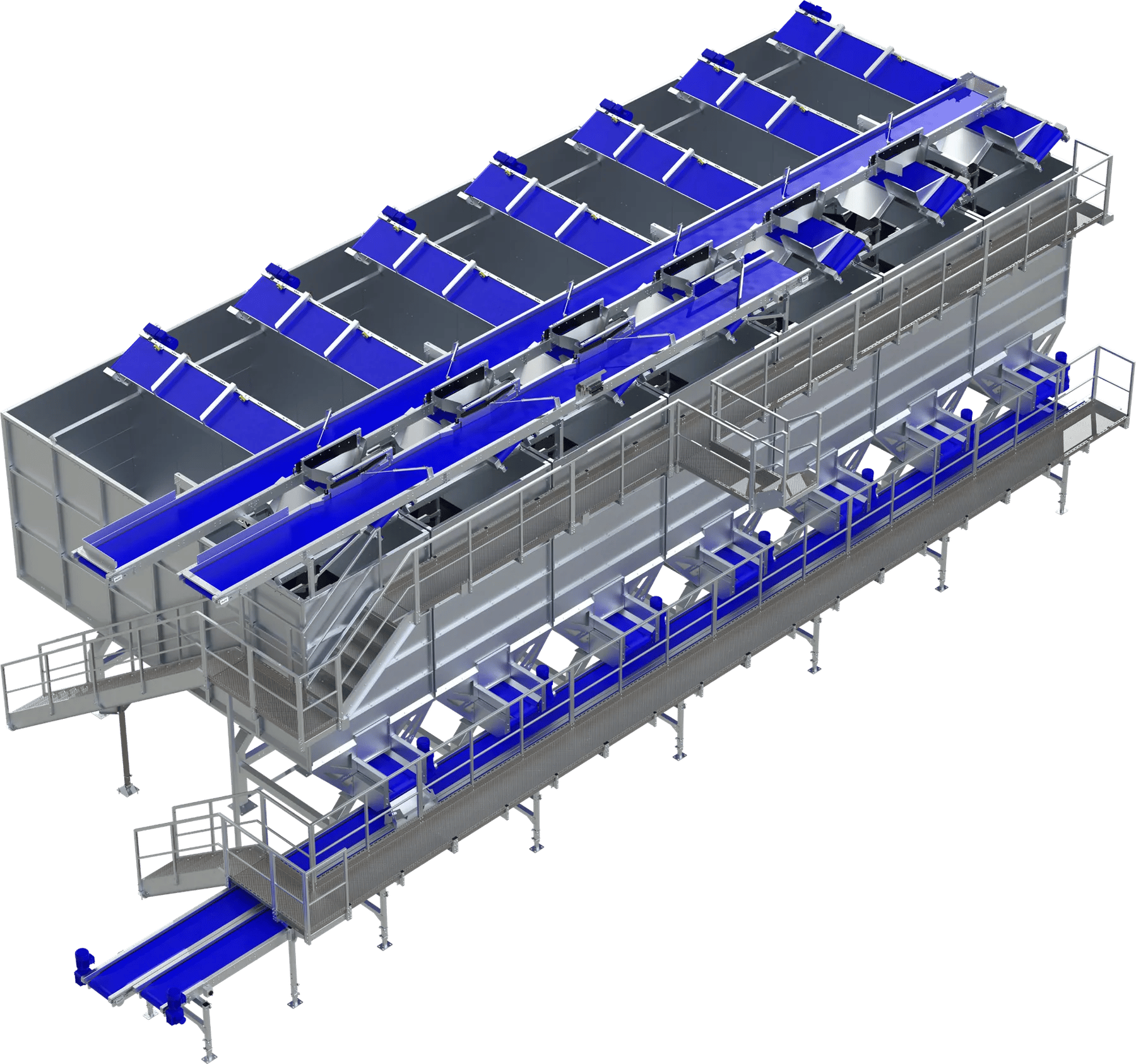
A row of compartment bins that holds pre-sized product and feeds your packing equipment, so baggers run steadily instead of waiting on the grader.
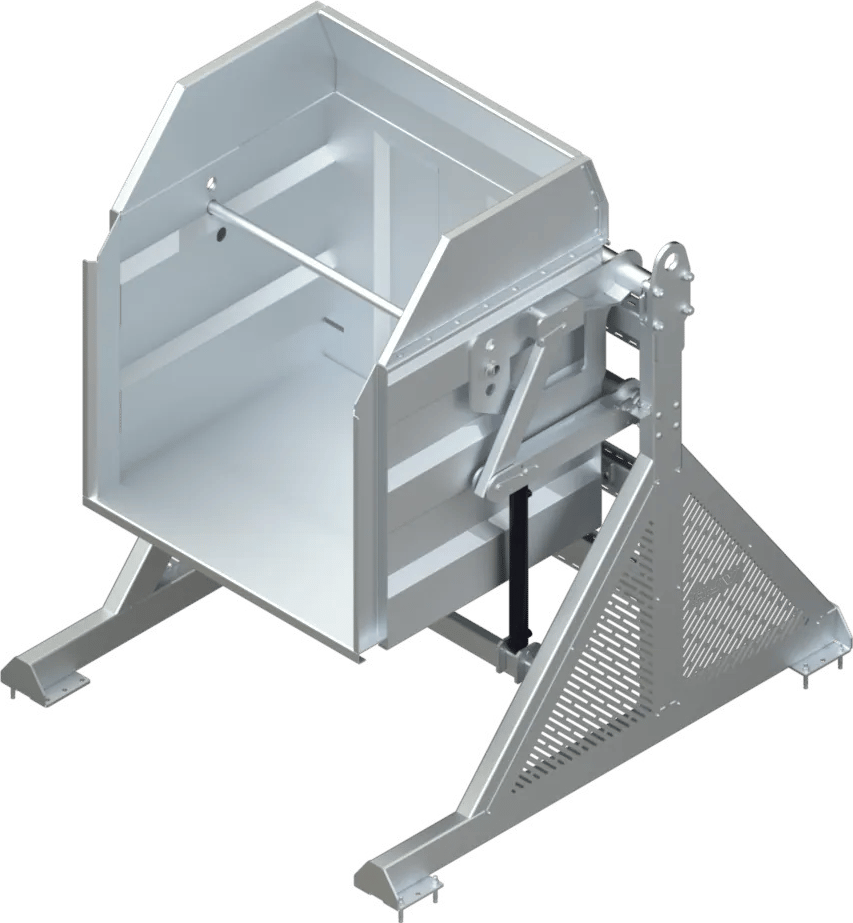
A hydraulic, full stainless box tipper that tips up to 160 degrees for complete emptying, with perimeter fencing and light bars. Manual or fully automated.
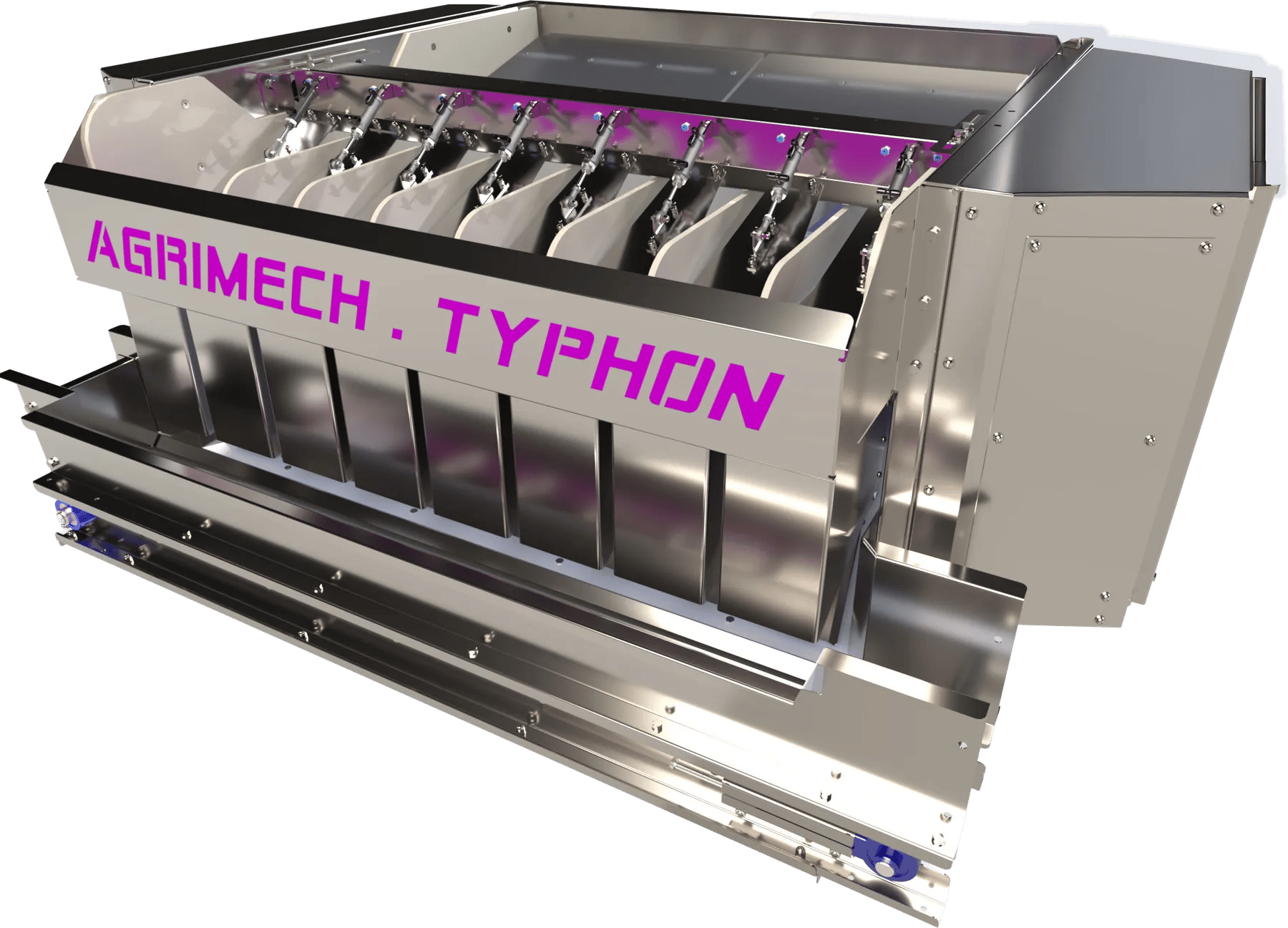 Agrimech
Themis: 10 t/h in 25 kg sacks · Typhon: 30 x 2 kg per minute
Agrimech's Themis single-bin weigher for large packs (10 tonnes per hour in 25 kg paper sacks) and Typhon multi-head weigher for small packs (30 x 2 kg per minute, accurate to within 2 grams).
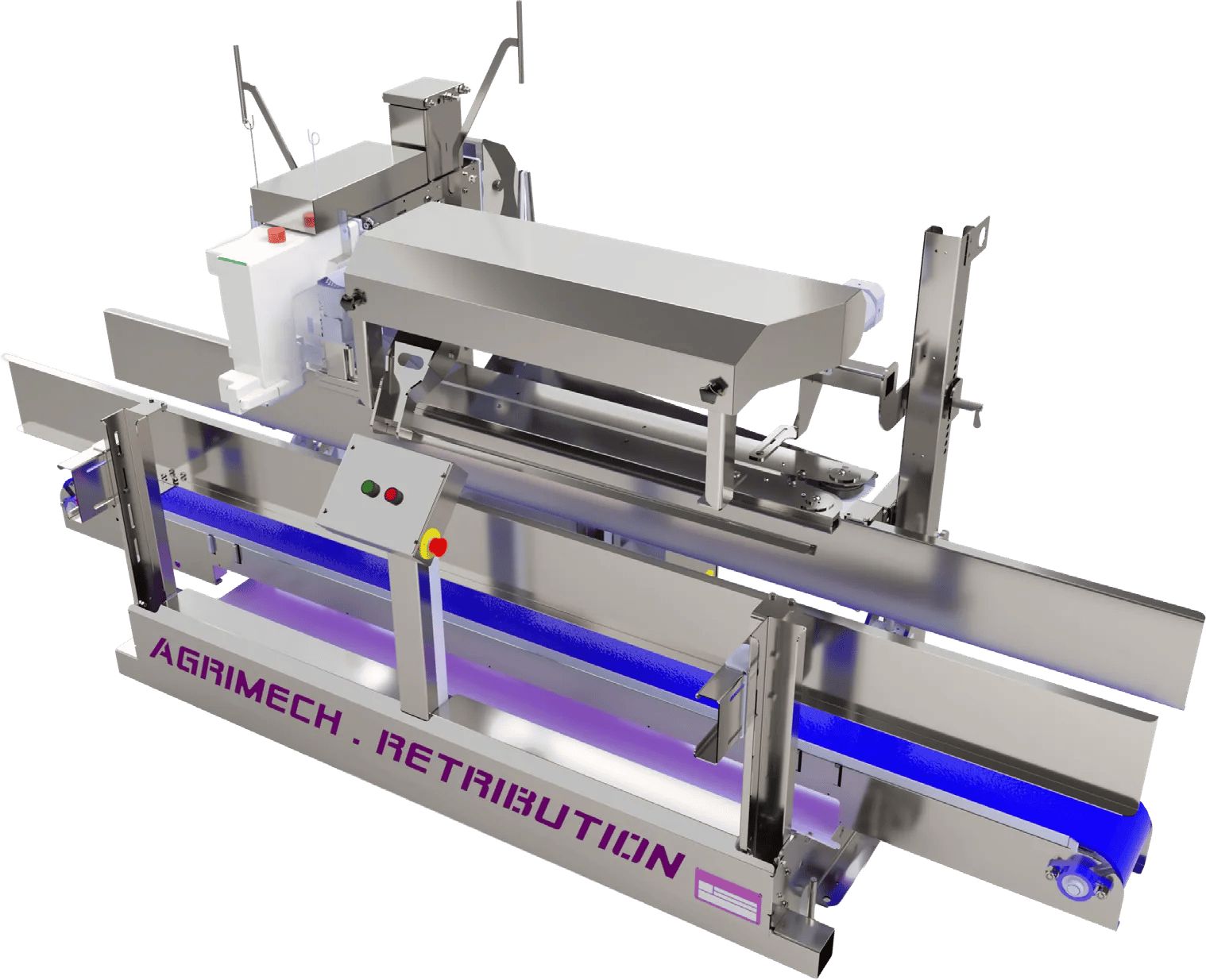 Agrimech
Up to 24 bags per minute (Kwik Lok)
Agrimech bag placing and closing: Kwik Lok bagging at up to 24 bags per minute, Nemesis and Genesis bag placers at up to 450 and 700 cycles per hour, and Retribution stitching systems.
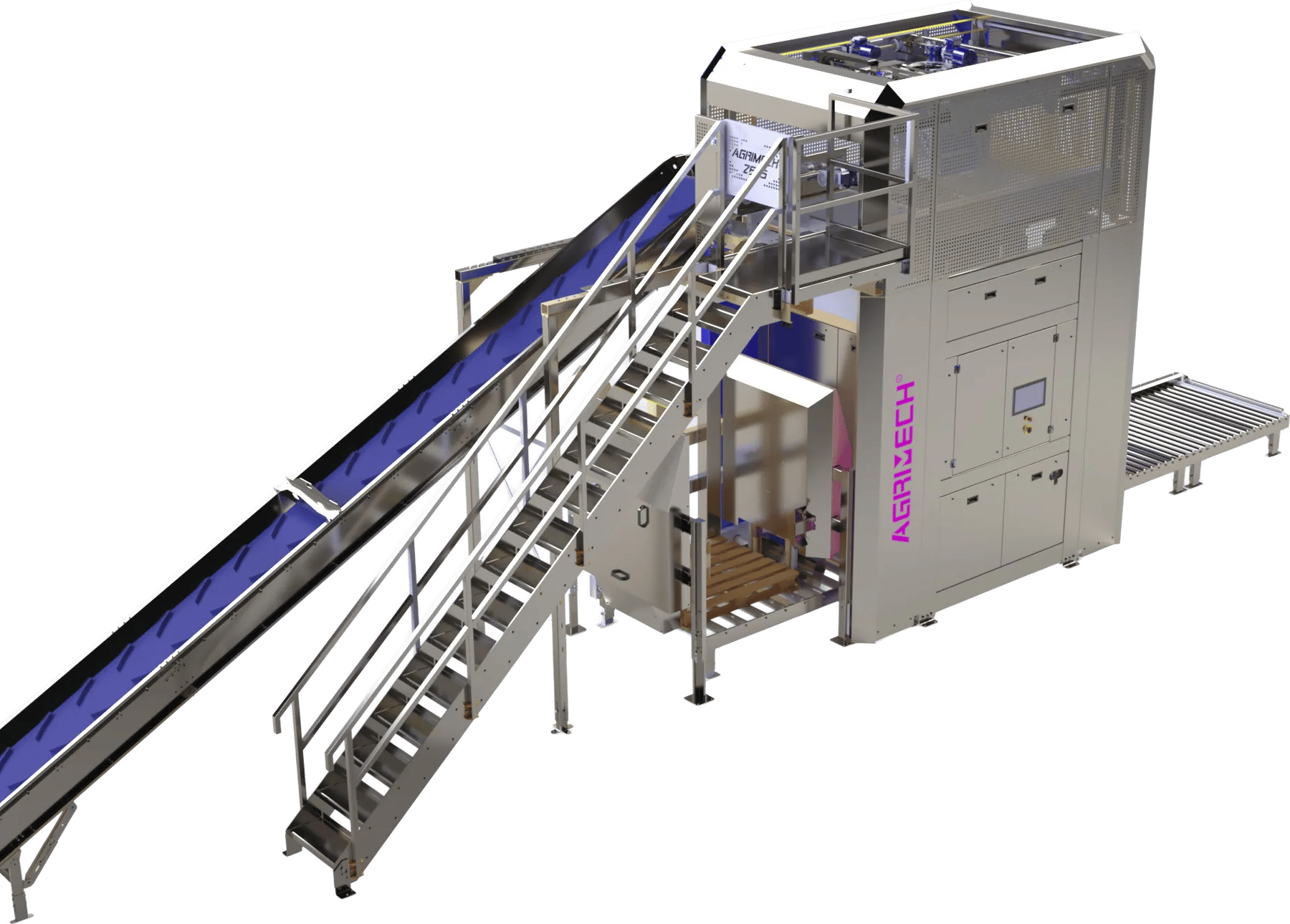 Agrimech
6-8 packs/min bottom loading · 10-40 packs/min top loading
Agrimech palletizers stack bags and boxes onto pallets: the Titan bottom-loading system at 6-8 packs per minute and top-loading systems at 10-40 packs per minute.
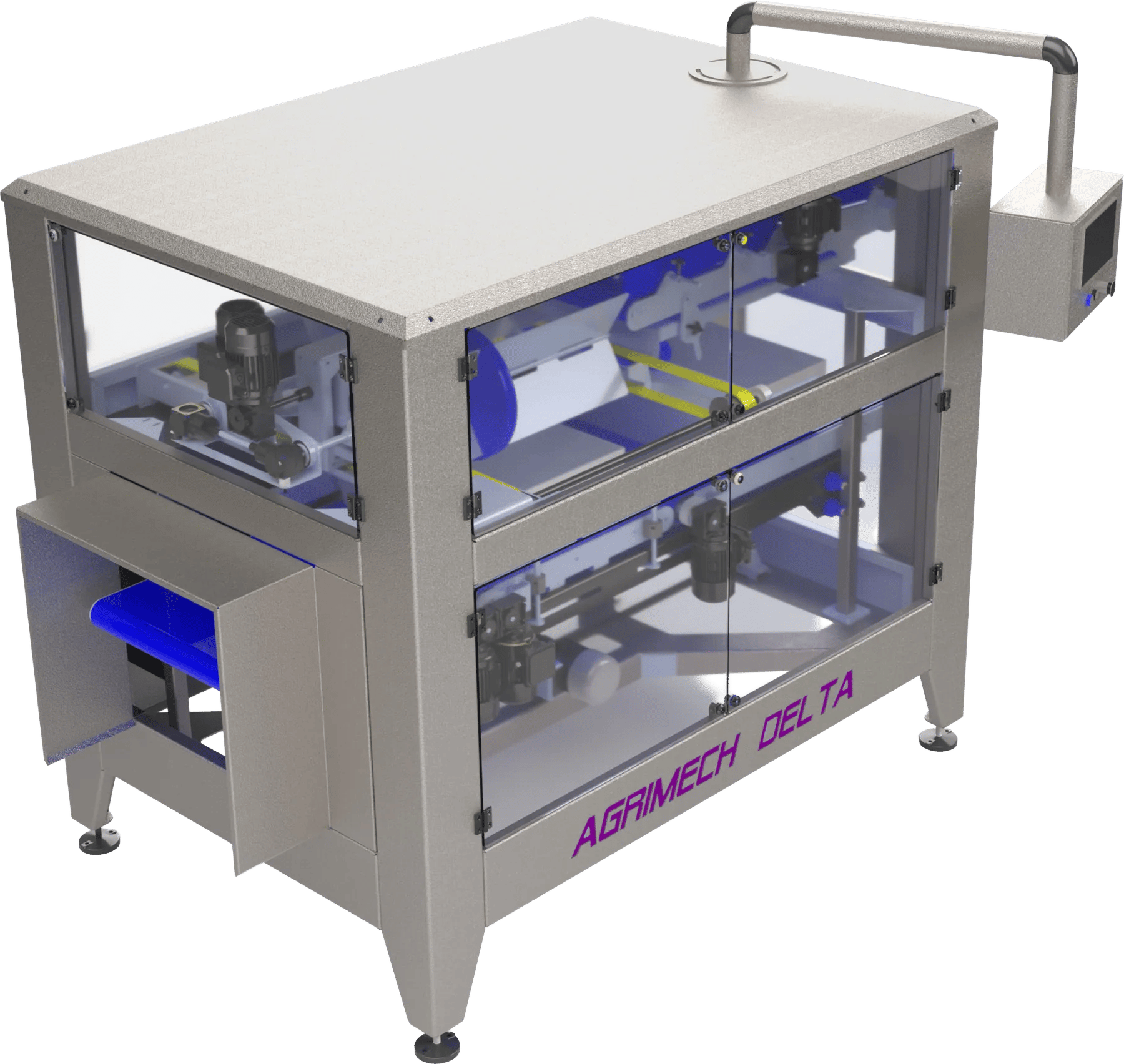 Agrimech
's Delta tray filling system places potatoes, carrots and onions into plastic trays, cardboard boxes and cartons, with gentle handling and quiet operation.
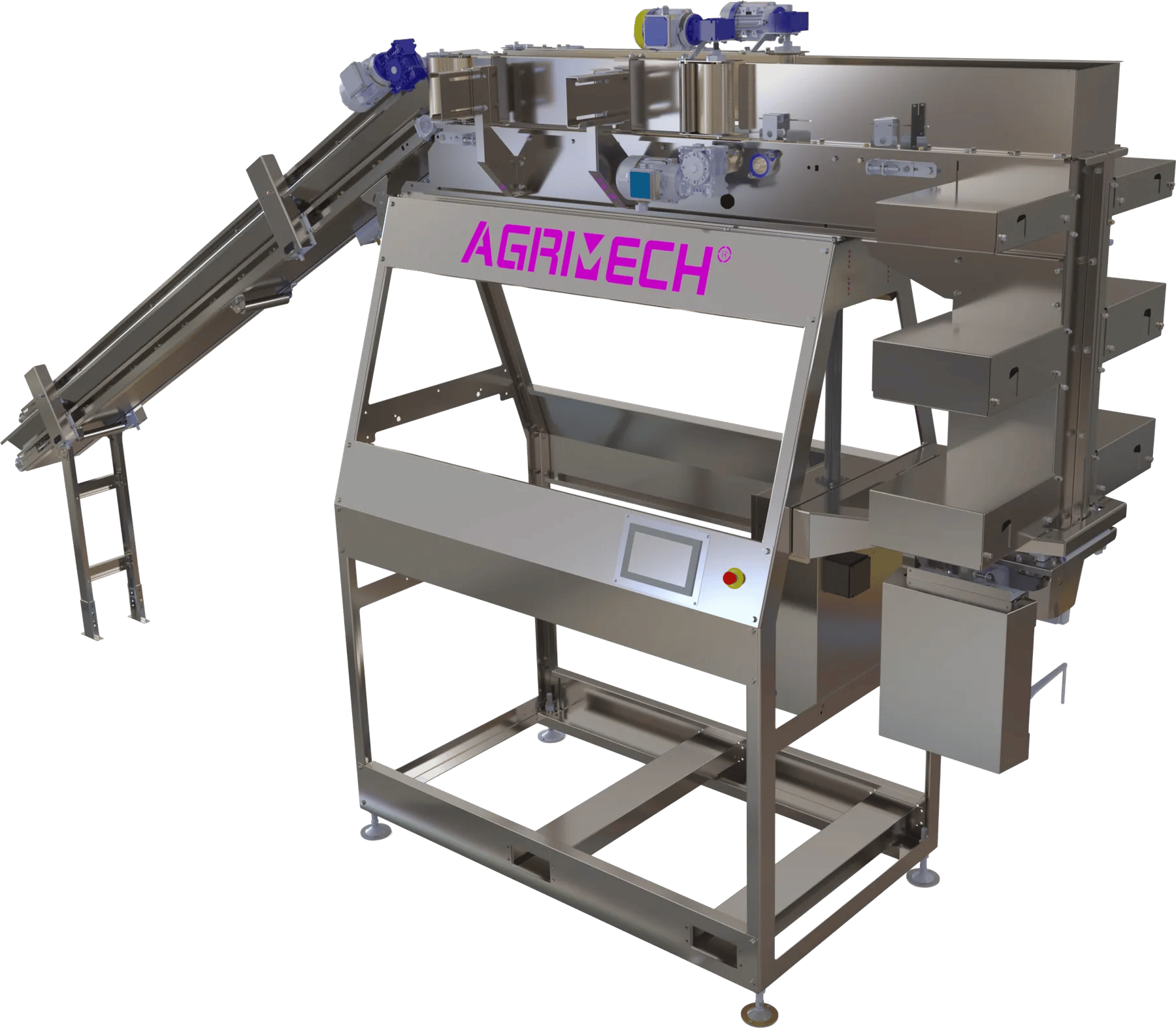 Agrimech
The Agrimech Olympus Master Baler counts and batches pre-packed bags into bales, using a spring-pressured hugger belt and dividing bins. Paper, plastic or net.
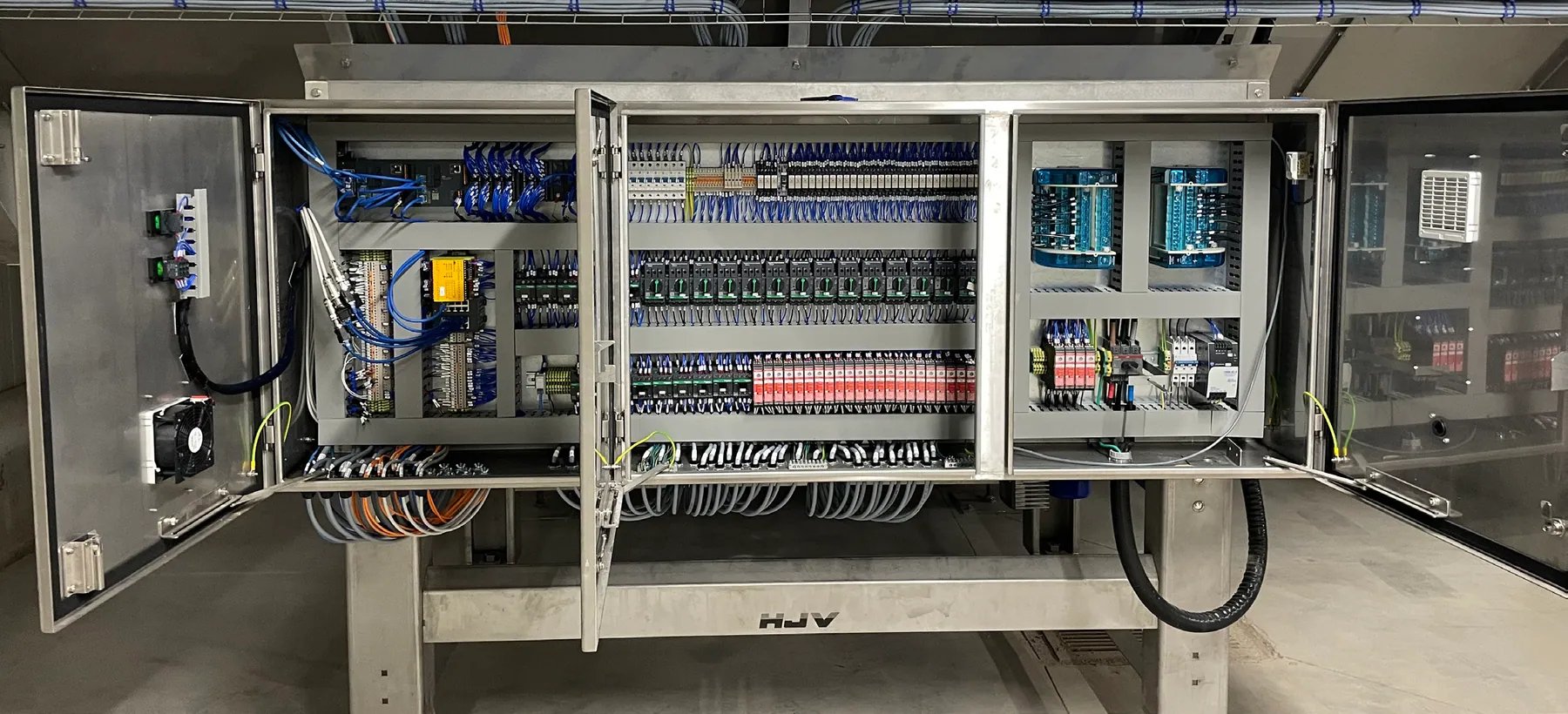
HJV automation ties the line together: programmed recipes for product changes, automatic load control, sequence starts, and remote programming and diagnostics over Wi-Fi, cellular or hardwired connections.
Tell us what you run, how much of it, and where it goes next. We'll lay out the line with you.